Do Lymphatic Drainage Supplements Actually Work? What the Evidence Shows
By the LymphSavior Editorial Team · Updated 1 August 2026 · about 7 min read
"Detox" and "lymphatic drainage" are two of the most oversold words in the supplement aisle. The lymphatic system, though, is entirely real and genuinely important. So the honest question is not whether the lymphatic system matters — it does — but whether a daily capsule of botanicals can meaningfully move it. Here is what the evidence actually supports, written by an affiliate publisher who would still rather you understood the limits than bought on hype.
What the lymphatic system actually does
The lymphatic system is a network of vessels and nodes that drains excess fluid from tissues, transports immune cells, and absorbs certain fats from the gut. Unlike the circulatory system, it has no central pump. Lymph moves because you move — skeletal muscle contraction, breathing and physical activity squeeze the vessels. That single fact is the most important thing in this article, because it means the best-evidenced "lymphatic drainage" tools are exercise, hydration and, in medical settings, manual lymphatic drainage and compression — not a pill.
The "detox" claim, examined
Mainstream bodies including the NIH's National Center for Complementary and Integrative Health are blunt: there is little evidence that "detox" or "cleanse" products remove toxins or improve health, and a healthy body already detoxifies itself continuously through the liver and kidneys. Stimulant-laxative cleanses can even cause harm through dehydration and electrolyte loss. So the useful framing for a product like Lymph Savior is not "does it flush toxins" — the answer to that is essentially no — but "do its ingredients offer any supportive, nutritional benefit?"
Ingredient by ingredient
Selenium — the strongest card
Selenium is an essential trace mineral and a real part of the body's antioxidant enzyme system. Adequate selenium status supports normal immune function. The important caveat is the narrow safe range: the tolerable upper intake level for adults is 400 mcg/day, and chronically high intakes cause selenosis. So selenium is a genuine nutrient, but "more" is not "better" — the label dose matters.
Echinacea and astragalus — immune herbs with mixed data
Echinacea has been studied mainly for the common cold, with a Cochrane review finding weak and inconsistent benefits. Astragalus is used in traditional Chinese medicine and shows immune-modulating activity in laboratory studies, but robust human trials are limited. Both are plausible "immune support" ingredients rather than proven lymphatic ones — and astragalus can interact with immunosuppressant drugs.
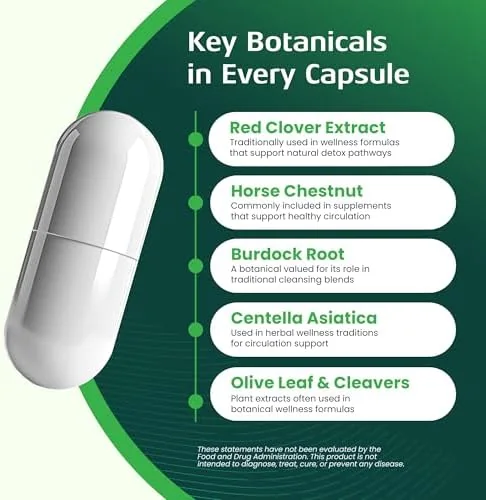
Cleavers, red root and burdock — tradition, not trials
These are the herbs that earn a product the "lymphatic" label. In Western and folk herbalism, cleavers and red root are classic lymphatic remedies, and burdock is a traditional cleansing herb. What is missing is modern clinical evidence in humans. We could find no well-designed trials showing that oral cleavers or red root measurably improve lymphatic flow. That does not make them worthless, but it does mean the claims rest on tradition, and you should price that uncertainty into your decision.
The strongest, best-evidenced things you can do for lymph flow are free: move your body, stay hydrated, and reduce excess sodium. A supplement can only ever sit on top of those.
So should you take one?
If you want a gentle, named-ingredient botanical formula with a real antioxidant mineral in it, and you treat it as a companion to hydration and daily movement rather than a magic flush, a product like Lymph Savior is a reasonable, low-risk thing to try — ideally over the 8–12 weeks it takes to judge any supplement fairly. If you are expecting dramatic "detox" results, or you are looking at it instead of seeing a doctor about persistent swelling, it is the wrong tool. Set expectations honestly and the decision gets much easier.
The bottom line
Lymphatic drainage supplements will not "drain" your lymph the way the marketing implies, and no published trial tests Lymph Savior as a finished product. Its selenium content has a genuine nutritional basis; its immune herbs have mixed support; its signature lymphatic botanicals rest on tradition. Judge it as gentle daily support alongside the basics that actually move lymph — not as a cure or a cleanse.
Read our full Lymph Savior breakdown
Every ingredient, the evidence behind it, and today's pricing.
See the Full Review