Lymphatic Drainage Massage at Home: How-To
By the LymphSavior Editorial Team · Technique reviewed against manual lymph drainage principles · Updated 14 August 2026 · about 10 min read
Feeling puffy, heavy-limbed or a little waterlogged after a salty meal, a long flight or too many desk-bound days? You do not need a spa appointment to do something about it. A gentle lymphatic drainage massage at home is one of the simplest, cheapest self-care habits going — a few minutes of light, deliberate strokes that guide surplus fluid along its natural route and can leave you feeling less puffy and more comfortable. This how-to walks you through the one rule that matters most, a simple face-to-legs sequence, the movement and hydration habits that amplify it, and the safety lines you should never cross. No equipment, no jargon, just a routine you can start tonight.
How do you do lymphatic drainage massage at home?
Start by gently pumping the nodes at the base of the neck and above the collarbones to open the drainage points, then use light, slow, stretching strokes to move fluid toward those cleared nodes — face and neck first, then arms toward the armpits, then legs toward the groin. Keep pressure feather-light and breathe deeply throughout.
- Clear the neck and collarbone nodes first, then stroke fluid toward them.
- Use light, skin-stretching pressure — never deep tissue kneading.
- Five to ten gentle minutes daily, paired with movement and hydration.
What lymphatic drainage massage at home actually does
Let us set honest expectations before your hands touch your skin. Your lymphatic system is a low-pressure drainage and immune-transport network that collects surplus fluid from your tissues and returns it to the bloodstream. Unlike your circulatory system, it has no central pump — it depends on muscle movement, breathing and gentle external pressure to keep fluid moving. A lymphatic drainage massage at home simply gives that system a light, deliberate nudge, encouraging pooled fluid to move along its natural pathways toward the nodes that filter it.
What that feels like, realistically, is reduced puffiness and a lighter, more comfortable sensation — particularly around the face, ankles and limbs where fluid tends to settle. What it is not is a fat-loss technique, a toxin purge, or a treatment for any medical condition. It moves fluid; it does not melt anything or "flush" your body. Kept in that frame, it is a genuinely useful comfort habit. If you want to understand the difference between this self-care version and the clinical technique, our comparison of lymphatic drainage versus professional manual lymph massage is worth a read alongside this guide.
The one rule that matters most: light pressure, toward the nodes
If you remember nothing else, remember this: lymphatic massage is not deep-tissue massage. The lymph vessels that matter sit just beneath the skin, so the correct pressure is astonishingly light — enough to stretch and move the skin itself, not to press into the muscle underneath. If your fingers are digging in, you have already gone too hard. Think of gently moving the skin like a slow wave, then releasing. This is the single most common mistake people make, and it comes from a stubborn myth that harder pressure means better drainage. The opposite is true: too much force can actually collapse the delicate surface vessels you are trying to encourage.
The second half of the rule is direction. Always work toward the nearest major node cluster, which almost always means moving fluid up and inward: face and neck toward the collarbone, arms in toward the armpit, legs up toward the groin. Lymph ultimately empties back into the bloodstream near the collarbone, so you are simply guiding it along the road it already wants to travel. And there is a crucial sequencing trick: you clear the destination nodes first — a gentle pump at the collarbone and neck — before you push more fluid toward them. Opening the drain before you send water down it, so to speak.
A simple at-home sequence: neck, face, arms, legs
Here is a gentle routine you can follow in five to ten minutes. Use bare skin or a little light oil, and keep every stroke feather-soft and slow.
1. Open the neck and collarbone (always first). Place flat fingers at the base of your neck, just above the collarbone. Press ever so lightly and make slow downward-and-inward scoops toward the little hollows above the collarbone, five to ten times. This "opens the drain" that everything else will feed into.
2. Face and jaw. Using flat fingers, sweep gently from the centre of the face outward and then down the sides of the neck toward the collarbone you just cleared — forehead out to the temples, cheeks out toward the ears, jawline back and down. Every stroke ends by carrying fluid down the neck.
3. Arms. Start by gently pumping the armpit a few times to clear those nodes. Then, with light strokes, sweep from the wrist up toward the elbow, and from the elbow up toward the armpit. You are always moving fluid up the limb toward the cleared armpit nodes.
4. Legs. Pump gently behind the knee and at the crease of the groin first. Then stroke lightly from the ankle up toward the knee, and from the knee up toward the groin. For puffy ankles, spend an extra moment here — this is where fluid loves to pool.
5. Finish where you started. Return to the collarbone and repeat a few gentle clearing scoops to send everything on its way. Sip some water and breathe.

Support your routine from the inside, too
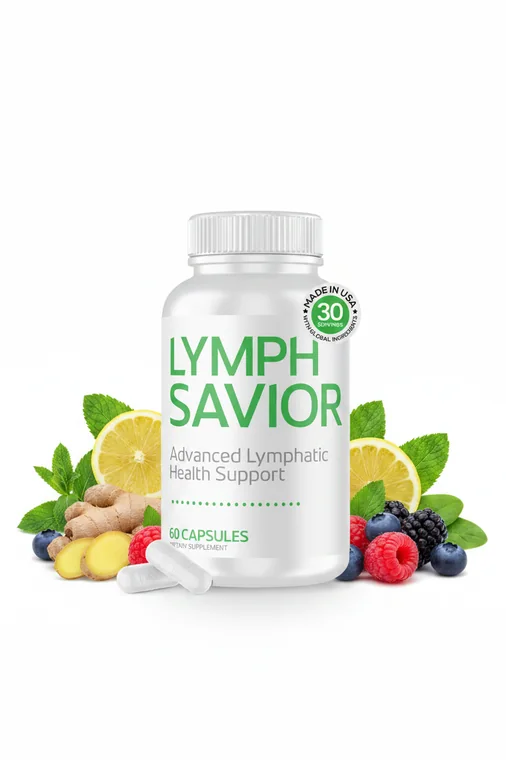
A daily self-massage works best alongside gentle internal support. Lymph Savior is a once-daily botanical blend for healthy lymph flow — see the formula and guarantee on the official store.
See Lymph Savior Daily SupportBeyond massage: dry brushing, breathing, walking and hydration
Self-massage is one lever; the habits around it are what really keep lymph moving, because they work all day rather than for five minutes. Dry brushing is the natural partner: a soft, dry body brush swept over the skin in the same node-ward directions before a shower stimulates surface flow and doubles as gentle exfoliation. Keep it light, the same way you keep the massage light.
Deep breathing might be the most underrated lymph tool of all. A large lymphatic vessel runs right through your diaphragm, so slow belly breaths act like an internal pump on every inhale and exhale — our guide to deep breathing exercises that work as a natural lymph pump breaks down a few simple patterns you can do anywhere. Then there is plain movement: walking, calf raises, rebounding and simply not sitting still for hours all squeeze the vessels through muscle contraction. Finally, hydration. Lymph is mostly water, so being well hydrated keeps it thin and mobile, while chronic dehydration makes everything sluggish. Massage, brush, breathe, walk, drink — that is the whole toolkit, and none of it costs a thing.
Your muscles and your breath are the real lymph pump. A daily massage helps, but walking, deep breathing and staying hydrated are what keep fluid moving for the other twenty-three hours of the day.
How often to do it, and when not to
For everyday support, little and often beats long and forceful. A gentle five to ten minute routine once a day, or even a few times a week, is plenty — consistency matters far more than duration, and because the strokes are so light there is simply no benefit to grinding away for half an hour. Fold it into a morning wake-up or an evening wind-down, pair it with your other habits, and let it become automatic. If you are wondering how quickly you might notice a difference, our realistic lymphatic drainage results timeline sets sensible expectations: puffiness relief can be quick, but steady change is a matter of weeks of consistency.
Now the safety lines, and please take these seriously. Skip self-massage over any area with an active infection, an unexplained rash, or a known or suspected blood clot — light pressure is still pressure, and these are situations that need a doctor, not a routine. Do not attempt to self-treat diagnosed lymphedema, and do not perform lymphatic massage during cancer treatment without explicit approval from your oncology team. And the golden rule for everyone: persistent, one-sided, painful or worsening swelling is a medical signal, not a job for a home technique. If your body is telling you something is wrong, get it assessed. If you are unsure whether your general puffiness is worth supporting in the first place, our overview of the signs you may need a lymphatic detox can help you tell ordinary sluggishness from something that deserves a professional's eyes.
Pairing your at-home routine with daily internal support
Here is the honest way to think about where a supplement fits. Your massage and movement habits work on lymph from the outside; a botanical blend works gently from the inside. Neither is magic, and neither replaces the free basics — but stacked together they make a tidy, consistent routine. Lymph Savior is designed as exactly that internal layer: a once-daily blend of traditional lymphatic and cleansing botanicals positioned to support healthy fluid balance and everyday flow, sitting on top of the massage, breathing, walking and hydration you are already doing.
Kept in that grounded frame — support, not cure — it is a reasonable habit to add. Judge it the way you would judge the massage itself: over a consistent run of weeks rather than a single day, alongside the free habits that carry the strongest evidence. If your goal is simply to feel less puffy and more comfortable and to build one joined-up lymphatic care routine, a short daily self-massage plus gentle daily internal support is a sensible, low-cost place to land.
Frequently asked questions
How do you do lymphatic drainage massage at home?
Start by gently pumping the lymph nodes at the base of your neck and above your collarbones to open the drainage points, then use light, slow, stretching strokes to move fluid toward those cleared nodes. Work face and neck first, then arms toward the armpit, then legs toward the groin. Keep the pressure feather-light, breathe deeply throughout, and finish where you started at the collarbone.
Which direction should you massage for lymph drainage?
Always massage toward the nearest major lymph node cluster, which generally means moving fluid up toward the neck and collarbone, in toward the armpits from the arms, and up toward the groin from the legs. Lymph ultimately drains back into the bloodstream near the collarbone, so you are guiding fluid along its natural route. Clear the nodes first, then stroke toward them, never away.
How often should you do self lymphatic massage?
For general everyday support, a gentle five to ten minute self lymphatic massage once a day, or a few times a week, is plenty. Consistency matters more than duration, and because the strokes are so light there is little benefit to overdoing it. Many people fold it into a morning or evening routine alongside dry brushing, deep breathing and a glass of water to support healthy flow.
Is lymphatic drainage massage safe to do yourself?
For most healthy adults, gentle self lymphatic massage is very safe because the pressure is so light. However, you should avoid it over areas with an active infection, a skin rash, or a known or suspected blood clot, and you should not self-treat diagnosed lymphedema or massage during cancer treatment without your clinician's approval. Persistent, one-sided or worsening swelling needs medical assessment, not a home routine.
Related reading
Build a complete daily lymphatic routine
Pair your at-home massage, breathing and hydration with gentle internal support. See Lymph Savior's formula, pricing and money-back guarantee on the official store.
Get Offer