Lymph Cleanse Herbs That Move Lymph Fluid
By the LymphSavior Editorial Team · Reviewed against traditional and primary sources · Updated 14 August 2026 · about 9 min read
Every "detox" formula on the shelf leans on roughly the same short list of plants — and once you know the list, the marketing stops being mysterious. The lymph cleanse herbs that actually move lymph fluid in traditional herbalism are a small, well-worn cast: cleavers, red clover, dandelion, ginger, echinacea and burdock. "Detox herbs" alone draw around 2,900 searches a month, which tells you how many people are hunting for exactly this information. So rather than sell you a mystery, this guide profiles each herb, explains what it is traditionally for, and is honest about where tradition ends and proven science has not yet begun.
Which lymph cleanse herbs actually move lymph fluid?
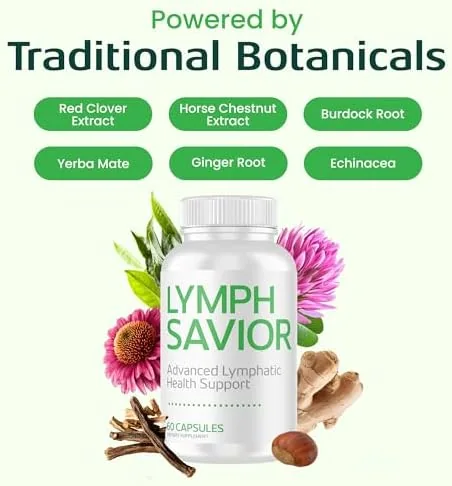
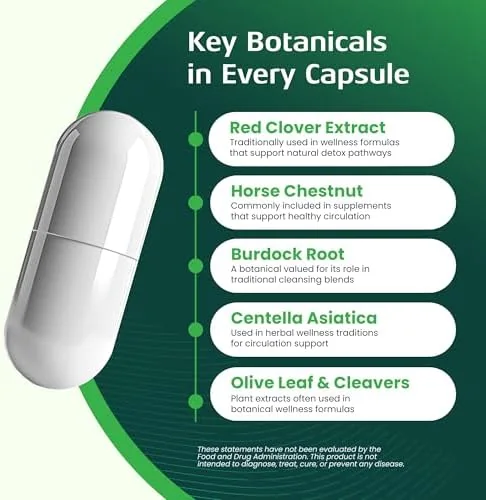
The core lymph cleanse herbs are cleavers, the classic lymph mover, plus red clover for circulation, dandelion for gentle diuretic fluid balance, ginger for anti-inflammatory circulation, echinacea for immune support and burdock as a cleansing root. They are traditional-use botanicals, not clinically proven cures, and quality plus correct dosing matter more than the name alone.
- Cleavers (Galium aparine) is the herb most tied to lymph in Western herbalism.
- Dandelion and its potassium act as a gentle diuretic for temporary fluid retention.
- Red clover, ginger, echinacea and burdock round out a balanced "cleansing" blend.
Why "moving lymph" with herbs is a modest idea
Before the herb-by-herb tour, set the frame. Your lymphatic system is a one-way drainage network with no central pump of its own; it relies on muscle movement, breathing and healthy circulation to push fluid toward the lymph nodes. That is the crucial context for every herb below. None of these plants "flush" your lymph the way a hose flushes a pipe. At best, the diuretic-leaning ones nudge fluid balance, the circulatory ones support the background flow, and the antioxidant-rich ones offer general plant-based support. The honest promise is gentle help on top of the free basics, not a purge.
That is also why dosing and quality beat branding every time. A beautifully named herb at a token dose does nothing; a well-extracted, properly dosed one at least gives tradition a fair chance. Keep that lens as we profile each of the classic lymph cleanse herbs.
Cleavers (Galium aparine): the classic lymph mover
If any plant deserves the title "lymph herb," it is cleavers. Also called goosegrass or sticky-willy for the way it clings to clothing, Galium aparine is the botanical Western herbalists reach for first when the goal is lymphatic support. Traditionally it is taken as a cool infusion or fresh juice to support drainage, ease swollen glands and reduce that puffy, congested feeling. Its reputation as a gentle lymphatic tonic is centuries old and remarkably consistent across herbal traditions.
The honest caveat is the same one that runs through this whole article: cleavers' lymphatic use rests on long-standing tradition and herbalist observation, not modern controlled trials measuring lymph flow. That does not make it worthless — it makes it a traditional-use herb with a strong track record and a thin clinical file. In a blend, cleavers is usually the signature ingredient, the plant that earns the word "lymphatic" on the label.
Red clover: circulation and gentle detox
Red clover (Trifolium pratense) is the traditional "blood and lymph cleanser" of Western herbalism, grouped with the alterative herbs used to support the body's channels of elimination. Its value for lymph is indirect but sensible: by supporting healthy circulation, it helps the background flow that keeps fluid moving. Red clover is also a genuine source of isoflavones and other antioxidant plant compounds, which is why it appears in so many gentle detox blends.
Two honest notes. First, red clover's lymphatic reputation is traditional, not trial-proven. Second, because it contains phytoestrogen isoflavones, it is one of the herbs that is not right for absolutely everyone — another reminder that "natural" and "for everyone" are not the same thing. As a modest circulatory and antioxidant contributor to a blend, though, it is a well-chosen classic.
Dandelion: potassium and fluid balance
Dandelion (Taraxacum officinale) is the fluid-balance workhorse of the group. Both the root and the leaf are traditionally used as a gentle diuretic, and the leaf in particular is notably potassium-rich — a genuinely useful detail, since many diuretics deplete potassium while dandelion supplies it. For the temporary water retention that leaves you puffy after a salty meal or a long flight, dandelion is one of the more reasonable traditional choices.
Because dandelion earns a full write-up of its own, we have profiled it separately in our deep dive on dandelion root for lymph and fluid retention, including the medication cautions that matter most. The short version for this guide: dandelion pairs naturally with cleavers and ginger, offers gentle diuretic fluid support, and should never be treated as a fix for genuine edema or lymphedema.
Ginger: anti-inflammatory circulation
Ginger (Zingiber officinale) is the warming, circulatory member of the team, and it is also the one with the most respectable modern research behind its general anti-inflammatory and digestive reputation. In a lymphatic blend its role is supportive rather than starring: by encouraging circulation and warmth it complements the fluid- moving herbs, and its well-documented anti-inflammatory activity is a plausible reason it feels good in a "cleansing" formula. Ginger is also simply a pleasant, familiar botanical that most people tolerate easily.
Even here, keep expectations calibrated. Ginger supporting circulation and easing inflammation is not the same as ginger "draining lymph." It is a sensible team player in a blend, valued for real, well-studied general benefits rather than a specific proven lymphatic action.
Want these herbs already blended and dosed for you?
Lymph Savior gathers the traditional lymph cleanse herbs into one once-daily capsule — see the current formula, dosing and pricing on the official store.
See the Lymph Savior FormulaEchinacea and burdock: immune and cleansing support
Two more classics round out the blend. Echinacea (Echinacea purpurea and relatives) is best known as an immune-support herb, and since the lymphatic system is deeply tied to immune function, it earns its place in a "cleansing" formula on that logic. Its evidence is mixed and mostly studied for short-term immune contexts rather than lymph flow, so, like the others, it belongs in the traditional-support column rather than the proven-drainage one.
Burdock (Arctium lappa) is the cleansing root of the group, a food-grade botanical with real antioxidants and inulin fibre and a centuries-old place in alterative blends. We give it a full, honest treatment in our article on burdock root for lymphatic support benefits, including where its human evidence stops. Together, echinacea and burdock add immune and antioxidant depth to a blend without pretending to be miracle drainage agents.
The best-evidenced ways to move lymph — walking, deep breathing, hydration and lower sodium — cost nothing. Traditional lymph cleanse herbs can sit on top of those basics; they cannot replace them.
Why dosing and quality beat the name on the label
Here is the point most sales pages bury. The single most important variable in a lymphatic formula is not which herbs are listed — almost every product lists roughly these six — it is how much of each you actually get and how well it was extracted. A "proprietary blend" that hides the individual amounts can legally put a dusting of cleavers behind a wall of cheaper filler and still print the name proudly on the front. A transparent label that shows real, sensible doses is worth far more than an exotic-sounding ingredient list.
This is exactly why a considered, dosed blend can be more useful than buying six separate bottles and guessing. If you want the practical case for a ready-made formula, our guide to the benefits of a lymph drainage supplement lays out when a blend makes sense and when single herbs are the smarter buy. Whichever route you choose, judge it on transparency and dose, not on how romantic the botanical names sound.
Are lymph cleanse herbs safe to take every day?
For most healthy adults, these are gentle, well-tolerated botanicals suitable for daily use at label doses. But "gentle" is not "risk-free." The diuretic-leaning herbs can interact with prescription diuretics, blood-pressure and blood-sugar medication; red clover's isoflavones and echinacea's immune activity make them wrong for some people; and anyone pregnant, nursing, on medication or managing a condition should clear it with a clinician first. Allergy matters too, since several of these plants sit in the daisy family.
Because the safety details deserve more than a paragraph, we cover them properly in our breakdown of lymphatic detox supplement safety and side effects. Read it before you start a daily regimen, especially if you take any prescription. Used sensibly and at reasonable doses, though, the traditional lymph cleanse herbs are among the milder botanicals you can add to a routine.
The bottom line on lymph cleanse herbs
The plants that move lymph fluid in traditional herbalism are not a secret: cleavers leads, with red clover, dandelion, ginger, echinacea and burdock filling out a balanced, time-tested blend. Every one of them is a traditional-use botanical with a long history and a genuine chemical profile — and none of them is a clinically proven cure. The smart way to use them is as gentle daily support layered on top of movement, breathing, hydration and lower sodium, in a transparently dosed formula you can actually trust. Get the dose and quality right, keep your expectations grounded, and these old herbs still earn their place.
Frequently asked questions
Which herbs are best for cleansing the lymphatic system?
The traditional lymph cleanse herbs most often used are cleavers (Galium aparine), the classic lymph mover, alongside red clover for circulation and gentle detox, dandelion for potassium and fluid balance, ginger for anti-inflammatory circulation, echinacea for immune support and burdock as a cleansing root. None are clinically proven cures, but as a group they have a long traditional-use history and are the botanicals quality formulas are built around.
What does red clover do for lymph flow?
Red clover is traditionally used as a gentle blood and lymph cleanser and is valued for supporting healthy circulation, which is the background process that helps fluid keep moving. It contains isoflavones and other plant compounds with antioxidant activity. Its lymphatic reputation rests on tradition rather than modern human trials, so treat it as gentle everyday support rather than a proven drainage agent.
Are cleavers and dandelion effective for fluid retention?
Cleavers is the herb most associated with lymph in Western herbalism and is traditionally taken to support drainage and ease puffiness, while dandelion is potassium-rich and acts as a gentle diuretic that may reduce temporary water retention. Both have strong traditional track records for fluid balance, but neither is a substitute for medical diuretics or treatment of underlying swelling, and their effect is modest.
Are lymph cleanse herbs safe to take every day?
For most healthy adults these gentle botanicals are well tolerated for daily use at label doses. Cautions matter, though: diuretic-leaning herbs can interact with medication, echinacea and red clover are not right for everyone, and people who are pregnant, nursing, on prescription drugs or managing a condition should ask a clinician first. Dosing and raw-material quality matter far more than which herb name appears on the front of the bottle.
Related reading
Get the traditional lymph cleanse herbs in one daily capsule
Lymph Savior blends cleavers, red clover, dandelion, ginger and more — see the full formula, dosing and today's pricing.
Get Offer