Lymph Savior Official Website › Horse chestnut seed, one missing word, and w
Lymph Savior journalHorse chestnut seed, one missing word, and why it decides everything
Horse chestnut seed extract has a Cochrane review and a 240-person Lancet trial behind it, and both used a standardised extract at 100 mg of aescin a day. This label names the plant and names the seed, which is the right part, and says nothing about standardisation. That one word is what connects a bottle to the research.
The best-evidenced thing on a lymphatic label
Horse chestnut seed extract is the strongest ingredient on this bottle and on most bottles like it. That is not a marketing sentence; it is what the published record says. The Cochrane review pools seventeen randomised trials in chronic venous insufficiency. Leg pain improved in six of seven placebo-controlled trials. Six trials covering 502 people gave a weighted mean reduction in leg volume of 32.1 mL.
The single most striking study is older and simpler. A 240-person trial published in The Lancet in 1996 put the extract against class II graduated compression stockings for twelve weeks. Lower-leg volume fell 43.8 mL on the capsules and 46.7 mL on the stockings, and both beat placebo. A herbal extract performing like compression hosiery is a genuinely unusual result in this field.
The word that is missing
Every one of those trials used a standardised extract, and most of them state the standardisation in the methods: 50 mg of aescin twice a day, which is 100 mg of the active saponin daily. Aescin is the fraction the effect is attributed to, and standardising to it is how one batch of seeds is made equivalent to another.
The NCCIH page on horse chestnut is unusually direct about why, and the shape of its statement is worth following rather than summarising. Eaten raw, it says, the seeds, bark, flowers and leaves are unsafe by mouth, because a toxic constituent sits in them. Take that constituent out, standardise what is left, and you have a preparation it describes as likely safe for short-term use, with a research record running to twelve weeks.
So the word standardised is not a quality flourish on this ingredient. It is the difference between the thing that was trialled and a different thing with the same plant name.
What this label says, and does not
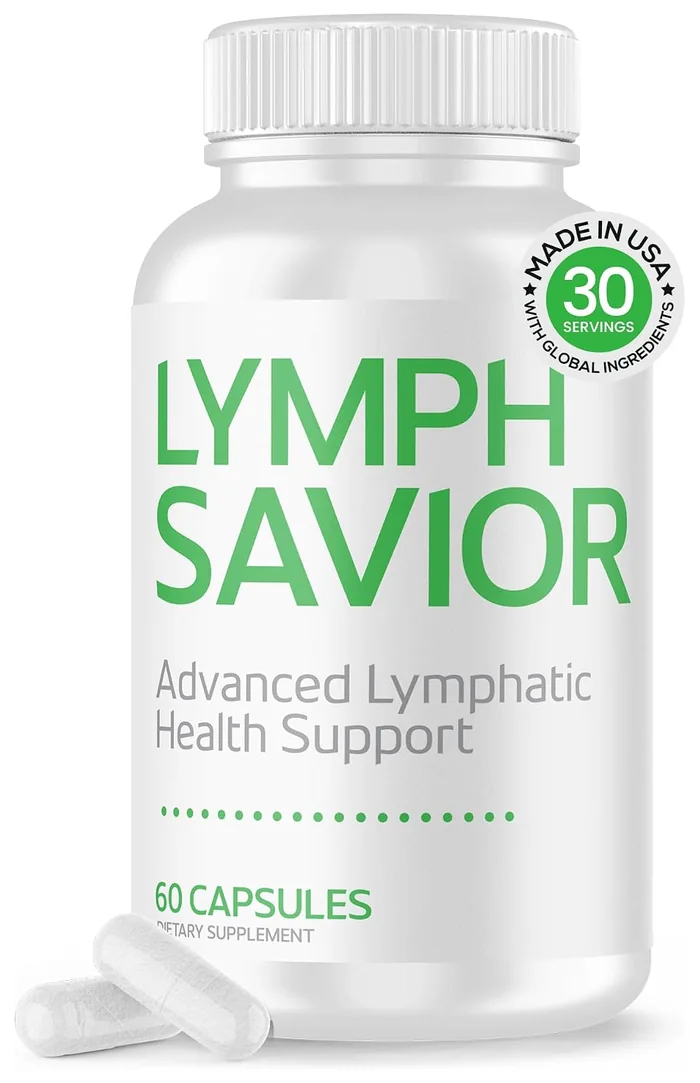
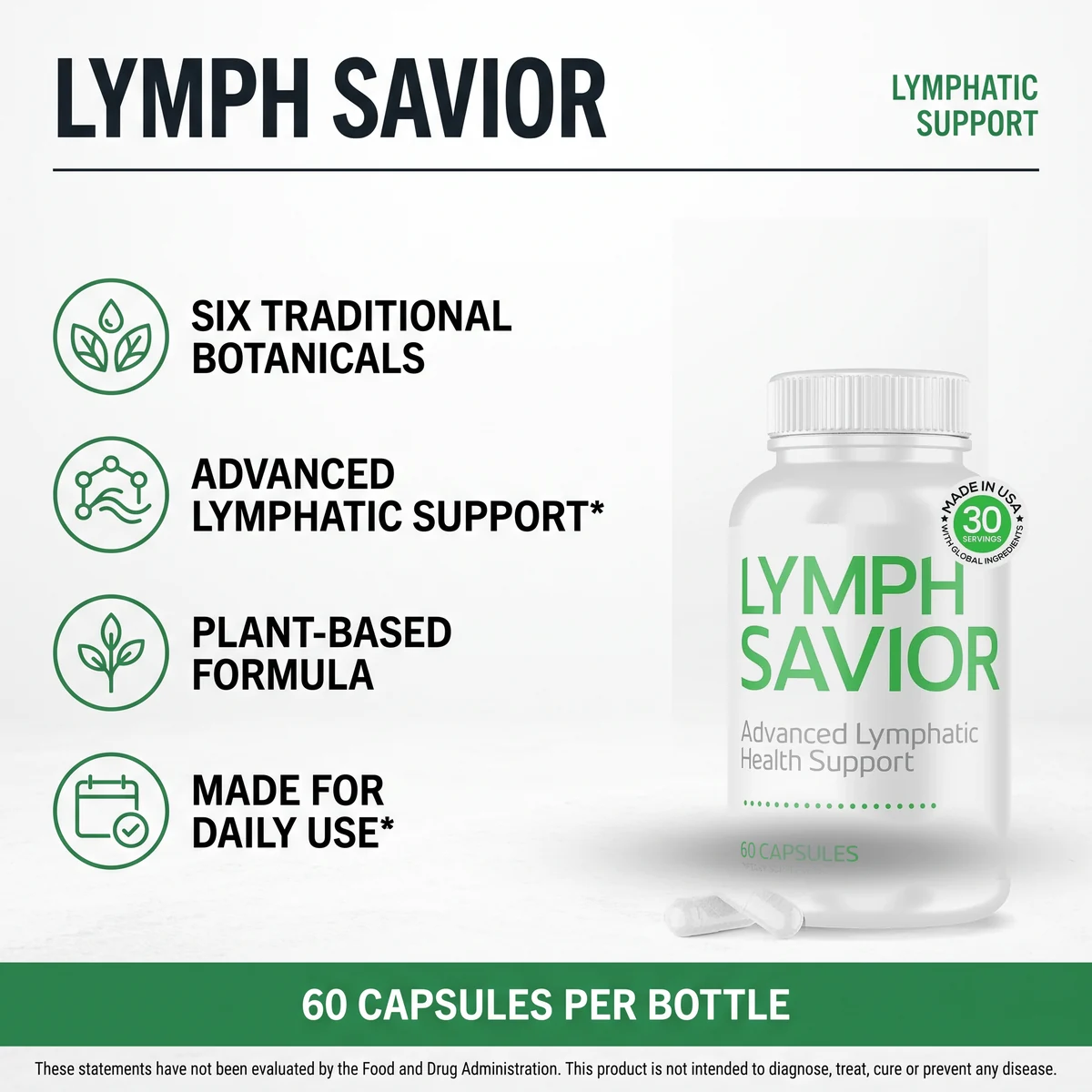
The Lymph Savior artwork names Horse Chestnut Extract (Aesculus hippocastanum) (seed). The plant part is there, which is more than many labels manage, and it is the right part. What is absent is any statement of standardisation, any aescin percentage, and any amount at all, because there is no Supplement Facts panel on the bottle.
Why the omission matters more than it looks
| What you can tell from the label | What you cannot |
|---|---|
| The plant: Aesculus hippocastanum | How much extract is in a capsule |
| The part: seed, which is the studied part | Whether it is standardised at all |
| That it is one of six named botanicals | What percentage of aescin it carries |
| The serving: two capsules daily | How that compares with 100 mg of aescin a day |
The left column is genuinely useful and better than many competitors manage. The right column is where the decision actually lives.
Put concretely: the trials establish that a particular preparation, at a stated dose, does something measurable over twelve weeks. Without a standardisation figure or an amount, there is no way to know whether a given capsule delivers a tenth of that, a hundredth, or something in between. The published result stands. It simply cannot be transferred.
A 2024 review of aescin’s proposed mechanism adds a second reason to care. The pathway is still described in the literature as incompletely understood, which means there is no way to reason from first principles about what a smaller dose might do. The evidence is empirical and dose-specific, and dose-specific evidence needs a dose.
Ask the Lymph Savior desk the standardisation question
It is the single most useful question a buyer of this product can ask, and the desk can put it to the manufacturer. The number is on every page of this website.
Four pack sizes, priced at the seller’s checkout, with 180 days from purchase on every one
Choose A Lymph Savior PackSwallowed whole, two a day with 6–8 oz of water, 60 to a bottle. Batch LYM-26/LY-5549, shipped from the United States.
How to ask, and what a good answer sounds like
The question is one sentence: is the horse chestnut seed extract standardised, and if so to what percentage of aescin? A manufacturer that standardises will usually know the figure, because it is a specification they buy against.
- A good answer names a percentage, for example twenty per cent aescin, and ideally an extract amount as well.
- An acceptable answer confirms standardisation without giving the figure, which at least separates the preparation from unstandardised seed powder.
- A non-answer is the word natural, the word proprietary, or a restatement of the ingredient list. None of those three tells you anything.
- A worrying answer is confusion about what the question means.
The same question is worth asking of any bottle in this category, which is why it appears on the nine-point checklist on this website. This desk scores its own product 1 out of 5 on that line.
What to do in the meantime
Two things, neither of which requires an answer from anybody.
The first is to take the comparator seriously. In the trial that made horse chestnut’s reputation, the control arm was compression stockings, and the stockings did fractionally better. Compression appears on every clinical management page in this area, it is cheap, and its mechanism is not in doubt. A capsule is a reasonable addition to it and a poor substitute for it.
The second is to use the window. 180 days from the date of purchase, opened bottles included, is long enough to run a twelve-week test and still have time to change your mind. On a label you cannot fully read, that window is doing more work than any ingredient on it.
None of this is a reason not to buy the product. It is the difference between buying it because a review said it works and buying it knowing precisely which question has not been answered.
What aescin is, and why it is the thing being measured
Horse chestnut seed is not one compound. It is a seed with a great many constituents, of which a mixture of triterpene saponins collectively called aescin is the one the pharmacology has settled on. When a paper says horse chestnut seed extract it almost always means an extract standardised to a stated percentage of aescin, and when it states a dose it usually states the aescin rather than the extract.
That is why 50 mg twice a day is the figure that recurs. It is not 50 mg of seed and it is not 50 mg of extract. It is 50 mg of the saponin fraction, which might come from anywhere between 240 mg and 300 mg of a typical standardised extract depending on the specification it was made to.
Without a standardisation percentage, an extract amount tells you very little, and without an extract amount a percentage tells you nothing at all. This label supplies neither, which is why the comparison cannot be made in either direction.
Why the raw seed is a different question
The other half of the standardisation argument is safety rather than potency. Horse chestnut seeds contain esculin, a compound the standardisation process removes, and it is the reason NCCIH describes raw seeds, bark, flowers and leaves as unsafe taken by mouth. A finished supplement from a reputable manufacturer is overwhelmingly likely to be using a standardised extract, because that is what the ingredient trade sells. The point is that a buyer cannot confirm it from this label.
How other labels handle the same ingredient
It is worth knowing what good looks like, because it is the benchmark for the question in the previous section.
| What a label can say | What it tells you | How common it is |
|---|---|---|
| Horse chestnut | The plant only. Not which part, not what preparation. | Common |
| Horse chestnut (seed) | The right part, which is what this label gives. | Less common |
| Horse chestnut seed extract, 300 mg | An amount, but not a potency. | Fairly common on single-ingredient products |
| Standardised to 20% aescin | A potency, from which the aescin dose can be worked out. | The standard on serious single-ingredient capsules |
| 300 mg standardised to 20% aescin, twice daily | Everything. 60 mg of aescin twice a day, comparable to the trials. | Uncommon, and exactly what a buyer needs |
This label reaches the second row. The trials live at the fifth.
None of that makes a blend inferior to a single-ingredient capsule on principle. It does mean that a buyer who specifically wants the horse chestnut result, rather than a traditional blend, is better served by a product that prints the fifth row.
Where a blend can still be the right answer
None of the above argues that a six-botanical capsule is a worse purchase than a single-ingredient one. It argues that they are different purchases and should be chosen for different reasons.
A single-ingredient horse chestnut capsule that prints its aescin figure is the right buy for somebody who has read the trials and wants that specific result at that specific dose. It is a narrow, legible product and it can be checked before it is opened.
A blend is the right buy for somebody who wants a traditional formula as a daily habit, is stacking it on walking and elevation rather than substituting for them, and values one routine over four bottles on a shelf. That person is buying convenience and a set of plants with a long history, and the honest version of the pitch is exactly that.
What nobody should be doing is buying a blend because of the horse chestnut evidence. That evidence belongs to a stated dose of a standardised preparation, and until this label says which it is, the trial results and the bottle are two separate things sitting next to each other.
- Pittler MH, Ernst E. Horse chestnut seed extract for chronic venous insufficiency. Cochrane Database Syst Rev. 2012;11(11):CD003230. Seventeen randomised trials: leg pain improved in six of seven placebo-controlled trials, and six trials (n=502) gave a weighted mean leg-volume reduction of 32.1 mL. The review calls the trials suggestive rather than definitive. PMID 23152216. https://pubmed.ncbi.nlm.nih.gov/23152216/
- Diehm C, Trampisch HJ, Lange S, et al. Comparison of leg compression stocking and oral horse-chestnut seed extract therapy in patients with chronic venous insufficiency. Lancet. 1996;347(8997):292-4. 50 mg aescin twice daily -- 100 mg a day -- for 12 weeks in 240 people. Lower-leg volume fell 43.8 mL on the extract and 46.7 mL on class II compression stockings. PMID 8569363. https://pubmed.ncbi.nlm.nih.gov/8569363/
- National Center for Complementary and Integrative Health. Horse Chestnut. States that raw seeds, bark, flowers and leaves are unsafe taken by mouth because they contain a toxic component, that STANDARDISED seed extracts with that component removed are likely safe for short-term use, and that the research record covers up to 12 weeks. https://www.nccih.nih.gov/health/horse-chestnut
- Marciano G, Vocca C, Diracoglu D, et al. Escin's Action on Bradykinin Pathway: Advantageous Clinical Properties for an Unknown Mechanism? Antioxidants (Basel). 2024;13(9):1130. A review of the proposed mechanism, which is still described in the literature as incompletely understood. PMID 39334789. https://pubmed.ncbi.nlm.nih.gov/39334789/
- National Cancer Institute. Lymphedema. Describes compression, skin care, exercise and manual lymphatic drainage as the management that is actually used, and the signs that need a clinician. https://www.cancer.gov/about-cancer/treatment/side-effects/lymphedema