Lymph Savior Official Website › Testing & Quality
Testing & QualityLymph Savior Testing And Quality: what every seal on the pack really says
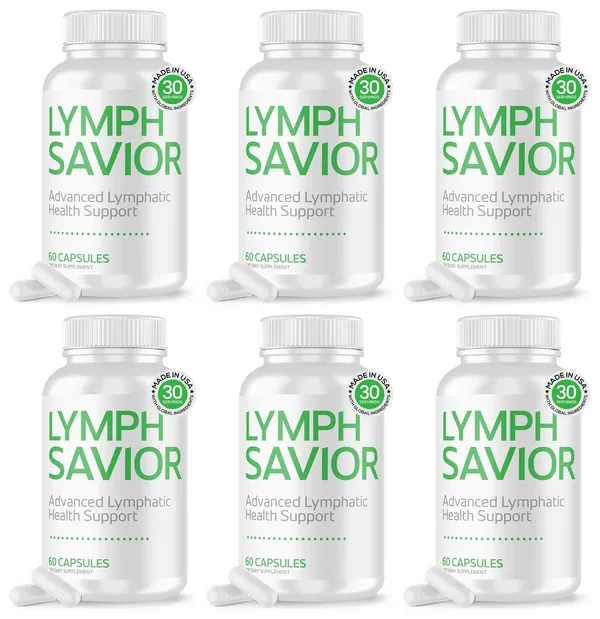
The pack ships ten certification marks and not one of them is a statement about whether the formula works. Between them they describe a building, a set of procedures, four absences, an unregulated adjective, an unnamed clinician and a purchase policy. Each is read out in full below, with what it does and does not cover.
Ten marks, one by one, plus the two questions this desk would put to the manufacturer if it could put only two.
The ten marks on the Lymph Savior pack
 Made in USAWhere the bottle was filled and packed. It is a statement about a building, not about where six botanicals were grown — the label's own roundel says “with global ingredients” in the same breath.
 GMP certifiedGood Manufacturing Practice: the facility follows documented procedures for cleanliness, record-keeping and batch control. It says nothing about whether the formula works.
 FDA registered facilityEvery food and supplement plant serving the United States has to register. The mark means the address is on a list. It is not approval, endorsement or review of the product.
 Non-GMONo genetically modified inputs claimed. For six plant extracts this is close to the default, and it is not a quality grade.
 Natural ingredientsAn unregulated word. Red clover, horse chestnut seed, red root, Centella, burdock and yerba mate are all plants, so the mark is descriptive rather than informative.
 VegetarianA statement about the capsule shell and the fill. The artwork does not name the shell material, so a strict vegan should ask the desk before ordering.
 Gluten freeUseful if you avoid gluten. It is a statement about what is absent, not about what is present.
 Dairy freeThe same shape of statement as the one above.
 Doctor formulatedThe mark names no clinician, no specialty and no institution, and no name appears anywhere in the artwork or on the seller's page. Read it as marketing until somebody is named.
 Money backThe purchase policy, and the only mark on the bottle that carries an enforceable promise. The seller's returns page prints 180 days from the date of purchase.
What a Lymph Savior buyer can and cannot verify
| Question | Can it be checked? | How, or why not |
|---|---|---|
| Is the facility registered with the FDA? | In principle, yes. | Registration is a list, and the mark asserts a place on it. It is not approval and the FDA does not review supplements before sale. |
| Does the facility follow GMP? | By the mark’s assertion. | Good Manufacturing Practice is a procedural standard covering cleanliness, records and batch control. It says nothing about the formula. |
| How much of each botanical is in a capsule? | No. | There is no Supplement Facts panel on the artwork, on the brand’s ingredient graphic or on the seller’s page. |
| Is the horse chestnut extract standardised? | No. | The label names the seed and names no standardisation. NCCIH is explicit that it is the standardised extract that carries the safety record. |
| Who is the doctor behind “doctor formulated”? | No. | No name, specialty or institution appears in the artwork or on the seller’s page. |
| Is there a certificate of analysis? | Not published. | Reference LYM-5549-26-LY is a filing reference. No assay results are in the public domain for this product. |
| Which lot is in my bottle? | Yes. | It is printed on the base. Call +1 (317) 715-7254 and the desk can match it to your order. |
Three yeses, four noes and one partial. A page that printed only the yeses would be a different kind of page.
First: is the horse chestnut seed extract standardised, and to what percentage of aescin? That single answer would move this product further than any other piece of information. Second: what are the amounts, even as a proprietary blend total? Neither question has an answer in the public domain today, and both are fair to put to the desk on +1 (317) 715-7254.
Why seals are weaker evidence than they look, on Lymph Savior and elsewhere
A certification mark is a claim printed by the party making it. Most of the marks in this category describe a facility rather than a product, and several of them describe an absence: no gluten, no dairy, no GMO inputs. An absence is easy to certify and tells a buyer nothing about what is present.
The word natural carries no regulatory definition at all. Doctor formulated names nobody. Made in the USA describes where the bottle was filled, and the same label says with global ingredients in the same roundel, which is the honest version of what that means.
None of this makes the marks worthless. GMP and FDA registration describe real obligations, and a manufacturer that meets neither is worse than one that meets both. It means the marks belong at the bottom of a decision rather than at the top of it, which is the opposite of how they are usually arranged on a sales page.
What would make this Lymph Savior pack easier to trust
A page that lists what a mark cannot do should say what would replace it. Four things would move this product further than any additional seal, in descending order of how much difference each would make.
A Supplement Facts panel with amounts
Six figures on the back of a bottle. It would let any buyer compare this capsule with the published trials, which is the comparison the whole category is arguing about and the one nobody can currently make.
A standardisation figure for the horse chestnut seed
A percentage of aescin. On this particular formula it is the single highest-value number that could be added, because the strongest evidence on the label is dose-specific and preparation-specific.
A per-lot certificate of analysis
Identity, assay, heavy metals and microbial counts for the lot in your hand. Rare on this shelf and genuinely decisive when it is present.
A name behind the doctor-formulated mark
A clinician, a specialty and an institution. A mark that names nobody is an assertion; a mark that names somebody is a claim that can be checked.
None of those four is unreasonable and none of them is unusual among the better products in this category. Listing them is more useful than listing what the marks already say, because it tells a reader what to ask for on the next bottle as well as on this one.
Who publishes this Lymph Savior website, and what it read
- National Center for Complementary and Integrative Health. Horse Chestnut. States that raw seeds, bark, flowers and leaves are unsafe taken by mouth because they contain a toxic component, that STANDARDISED seed extracts with that component removed are likely safe for short-term use, and that the research record covers up to 12 weeks. https://www.nccih.nih.gov/health/horse-chestnut
- Halegoua-DeMarzio D, Navarro VJ, Davis A, et al. Investigation of the Role of Chemical Analysis in Causality Assessment of Herbal and Dietary Supplement-Induced Liver Injury. Drug Saf. 2025;48(2):143-150. Chemical analysis of the implicated products repeatedly found contents that did not match the label. PMID 39354283. https://pubmed.ncbi.nlm.nih.gov/39354283/
- National Center for Complementary and Integrative Health. Using Dietary Supplements Wisely. What a supplement label can and cannot tell a buyer, and why a herb is worth raising with whoever prescribes your medicines. https://www.nccih.nih.gov/health/using-dietary-supplements-wisely
Read further on this Lymph Savior website
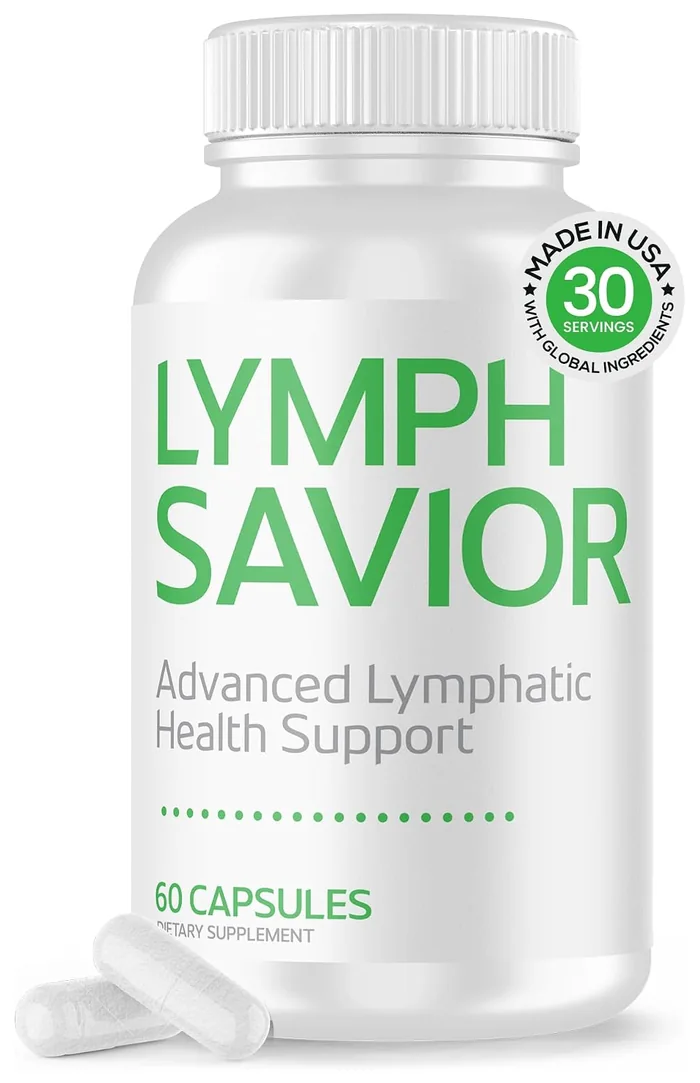
Ask the Lymph Savior standardisation question before you order
+1 (317) 715-7254 reaches a desk that can put it to the manufacturer. It is the single most useful question a buyer of this product can ask.
Four pack sizes, priced at the seller’s checkout, with 180 days from purchase on every one
Choose A Lymph Savior PackSwallowed whole, two a day with 6–8 oz of water, 60 to a bottle. Batch LYM-26/LY-5549, shipped from the United States.