Lymph Savior Official Website › Results Timeline
Results TimelineHow Long Does Lymph Savior Take To Work? A week-by-week timeline
Reviewers on this desk put the first change at three to four weeks. The two best-evidenced botanicals on the label were trialled over twelve. Nothing in either record supports a change in days, and one bottle of sixty capsules is exactly thirty days, which sits at the very front edge of where anything gets reported.
What people describe, what the trials measured, and the point at which a fair judgement becomes possible.
The Lymph Savior timeline, week by week
| Window | What reviewers here describe | What the published trials ran to |
|---|---|---|
| Days 1 to 7 | Nothing much. Wanting more in week one is the commonest complaint in the review record, and a slow start is easy to mistake for no effect. | No trial of any of these plants reported a one-week endpoint. |
| Weeks 2 to 3 | The routine becomes automatic. The single three-star roster review is dated day 22, from a buyer who wanted a faster change and stopped. | Below the shortest published endpoint on this label. |
| Weeks 3 to 4 | The commonest point at which a reviewer here says something changed, which is where the desk puts its three-to-four-week figure. | Still short of the twelve-week trials. |
| Weeks 6 to 8 | Steadier reports. Four of the five five-star roster reviews are dated between day 48 and day 58, each carrying the same line: the habit stuck. | Approaching the horse chestnut and Centella endpoints. |
| Week 12 | The point at which a fair judgement is possible. No roster review is dated this late; the latest is day 58. | The endpoint of the Lancet trial and of the Cochrane-pooled studies. |
| Month 6 | The end of the money-back window, and the end of a six-bottle pack. | Beyond anything published for these plants. |
The left column is what people on this desk wrote. The right column is what published trials of these plants measured, at doses nobody can match to this capsule.
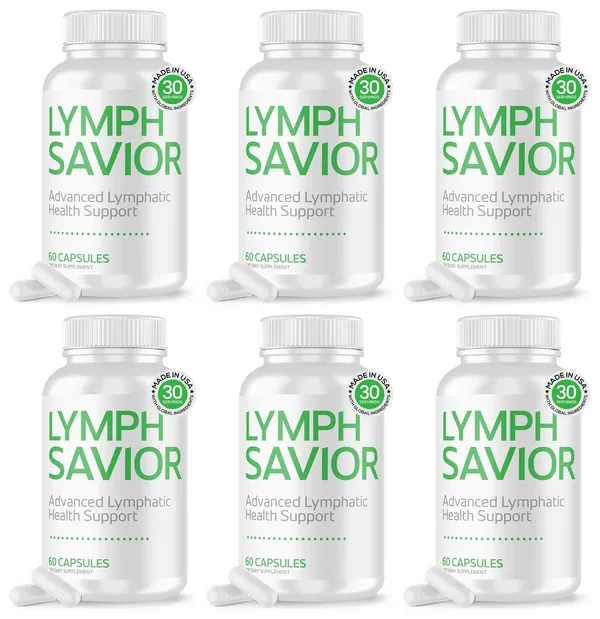
The practical consequence is a pack decision rather than a patience decision. One bottle finishes at day thirty, which is the earliest point anyone reports anything, so a single bottle usually produces a shrug. Two clears the wait and leaves a month to judge. Three matches the trials.
Why the first week of Lymph Savior feels like nothing
Botanical extracts are not drugs with a loading dose and a measurable plasma peak you can feel. Horse chestnut seed was trialled for twelve weeks; Centella across eight studies of similar length; red clover at twelve weeks for its own, different endpoint. The endpoints those trials used are volumes and pressures measured with instruments, not sensations reported on day three.
There is a second reason, and it is the more useful one. The thing most people are actually measuring is how their legs feel at the end of a day, and that number moves for half a dozen reasons at once: heat, salt, how long you stood, how much you walked, how you slept. A single week contains so much of that noise that a real effect of the size these trials found would be invisible inside it.
- Start on a Monday, not on a whim, and write the date on the bottle.
- Photograph the same ankle at the same hour on day 1, day 30 and day 60.
- Keep the walking constant. Changing two things at once answers neither.
- Do not weigh yourself for this. Weight is not what this label claims.
- Diary one line a day. At day 60 you will have a record instead of an impression, and the 180-day window is still open either way.
What the Lymph Savior review records show about timing
Across 1,019 written reviews the score is 4.6 out of 5, with 91% recommending. The day counts attached to those reviews are the interesting part: the three-star review on this desk was written at day 22, and the five-star ones cluster at days 31, 48, 48, 55 and 58.
That is not proof of anything. It is a pattern consistent with a slow effect, and equally consistent with people who stuck at it being the people who were going to be happy anyway. Both readings are honest and the review record cannot separate them.
What to record while Lymph Savior is running
Most people decide whether a supplement worked by remembering how they felt before it, which is the least reliable instrument available. Four records cost almost nothing and turn an impression into something you can read back.
One photograph, same ankle, same hour
Day 1, day 30 and day 60, standing, from the same distance, at the end of the day rather than the start. The sock line is the measurement and a photograph remembers it better than you do.
One line a day, ten seconds
A number out of ten for how the legs felt at six o’clock. Not a paragraph. A single digit written every day beats a detailed entry written when you remember.
The two things that move the baseline
Hours standing, and whether you walked. Both change the answer more than any capsule on this shelf, and neither is worth guessing at afterwards.
The date on the bottle
Written on the label in pen when you open it. It is how you know whether you are at day 26 or day 41, and it is what tells you where you stand in the 180-day window.
Starting the capsule, buying compression socks and joining a gym in the same week produces an answer to no question. If two of those are going to happen, stagger them by a month. The whole point of a window this long is that there is room to.
Who publishes this Lymph Savior website, and what it read
- Diehm C, Trampisch HJ, Lange S, et al. Comparison of leg compression stocking and oral horse-chestnut seed extract therapy in patients with chronic venous insufficiency. Lancet. 1996;347(8997):292-4. 50 mg aescin twice daily -- 100 mg a day -- for 12 weeks in 240 people. Lower-leg volume fell 43.8 mL on the extract and 46.7 mL on class II compression stockings. PMID 8569363. https://pubmed.ncbi.nlm.nih.gov/8569363/
- Pittler MH, Ernst E. Horse chestnut seed extract for chronic venous insufficiency. Cochrane Database Syst Rev. 2012;11(11):CD003230. Seventeen randomised trials: leg pain improved in six of seven placebo-controlled trials, and six trials (n=502) gave a weighted mean leg-volume reduction of 32.1 mL. The review calls the trials suggestive rather than definitive. PMID 23152216. https://pubmed.ncbi.nlm.nih.gov/23152216/
- Chong NJ, Aziz Z. A Systematic Review of the Efficacy of Centella asiatica for Improvement of the Signs and Symptoms of Chronic Venous Insufficiency. Evid Based Complement Alternat Med. 2013;2013:627182. Eight trials; pooled results favoured Centella on microcirculatory measures including ankle swelling rate, with the authors warning that inadequate reporting leaves the risk of bias unclear. PMID 23533507. https://pubmed.ncbi.nlm.nih.gov/23533507/
- Kanadys W, Baranska A, Blaszczuk A, et al. Evaluation of Clinical Meaningfulness of Red Clover (Trifolium pratense L.) Extract to Relieve Hot Flushes and Menopausal Symptoms in Peri- and Post-Menopausal Women: A Systematic Review and Meta-Analysis of Randomized Controlled Trials. Nutrients. 2021;13(4):1258. Eight trials, ten comparisons; the effect appeared at an isoflavone dose of 80 mg a day or more over 12 weeks. PMID 33920485. https://pubmed.ncbi.nlm.nih.gov/33920485/
Read further on this Lymph Savior website
Give Lymph Savior the three months the trials used
One bottle is thirty days and thirty days is the front edge of where anything is reported. The window runs to a hundred and eighty.
Four pack sizes, priced at the seller’s checkout, with 180 days from purchase on every one
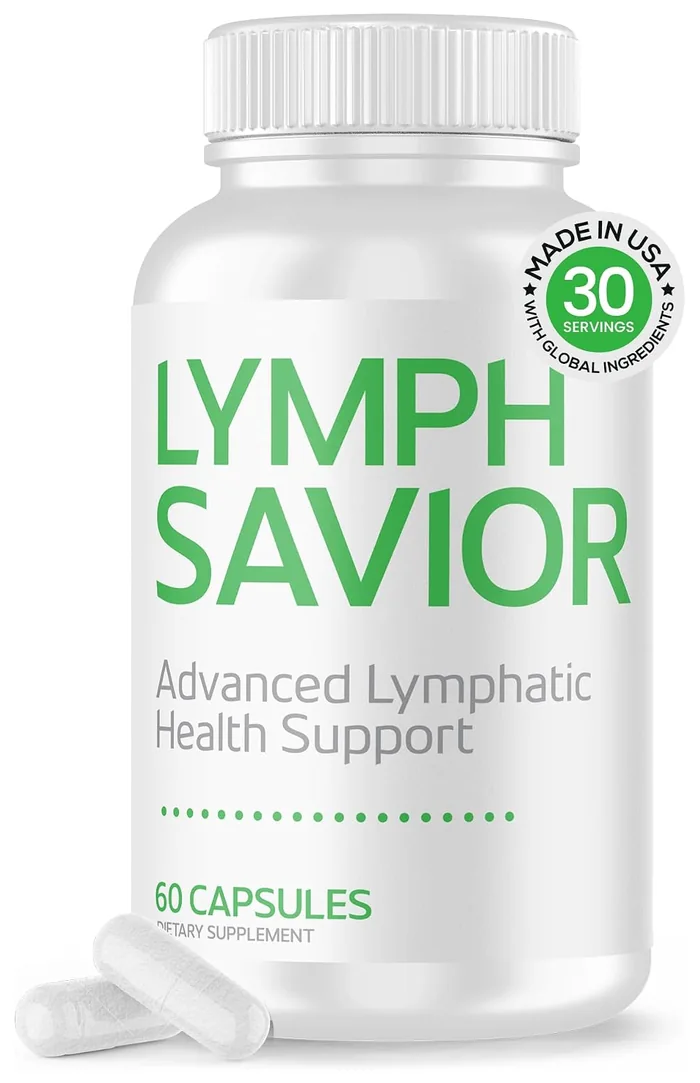
Choose A Lymph Savior PackSwallowed whole, two a day with 6–8 oz of water, 60 to a bottle. Batch LYM-26/LY-5549, shipped from the United States.