Lymph Savior Official Website › The one ingredient that isn't a botanical
Label literacyTen botanicals, one capsule shell: the Other Ingredients line nobody reads
Below the eleven-line Supplement Facts panel, the Lymph Savior label prints a separate line most readers skip: "Other Ingredients: Gelatin (capsule), Brown Rice Flour." Gelatin is not a botanical, and it is not plant-derived. It is a protein produced by partially hydrolyzing collagen taken from animal skin, bone or connective tissue — most commonly bovine or porcine.
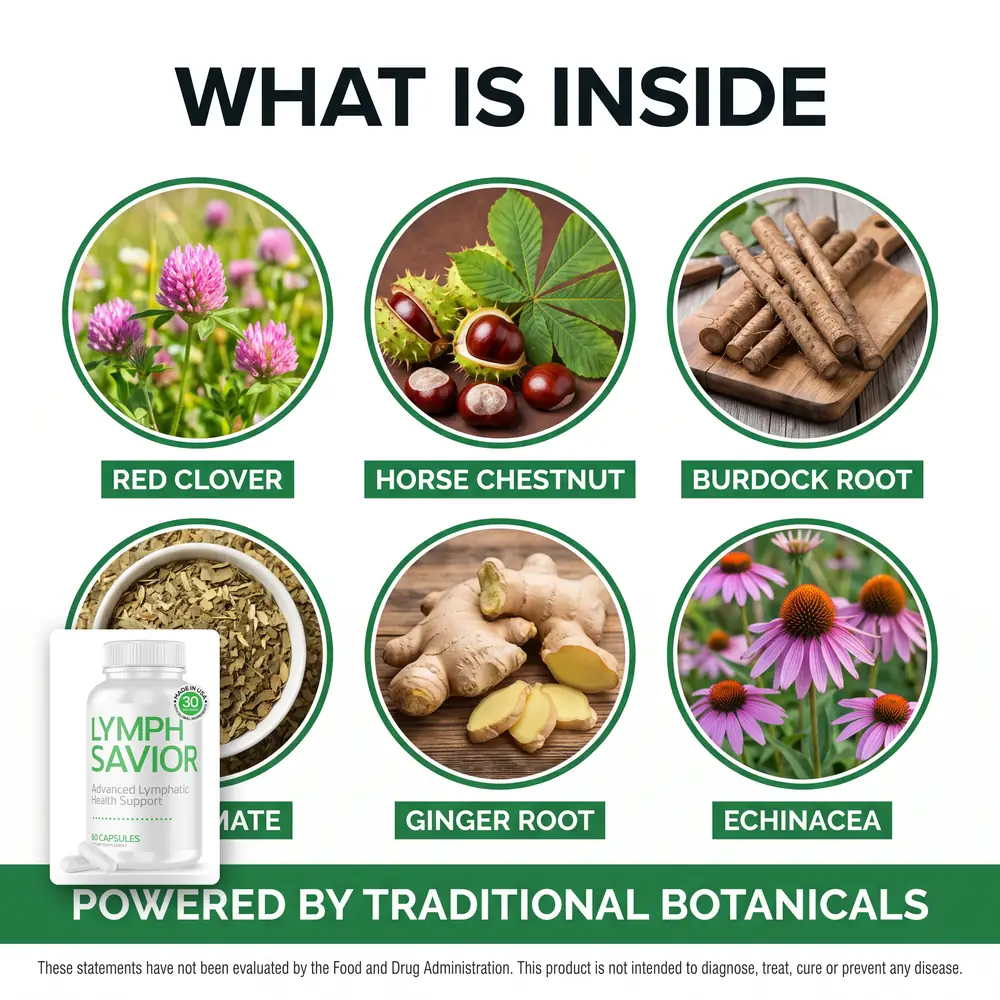
Every other named ingredient on this label is a plant. The capsule holding them is not, and the label's own badge wall — Made in USA, Scientific Formulated, GMP Facility, Non-GMO — makes no claim about that fact one way or the other.
What gelatin actually is, why it is used, what the label does and does not say about it, and what a buyer following a vegetarian, vegan, kosher or halal diet needs to know that this label alone does not tell them.
The Other Ingredients line, exactly as printed
Every U.S. dietary supplement label carries two distinct sections: the Supplement Facts panel, which lists the active dietary ingredients and their amounts, and a separate "Other Ingredients" line beneath it, which lists everything else in the finished product — the materials that make the capsule a capsule rather than a pile of powder. On the Lymph Savior bottle, that second line reads, in full: "Other Ingredients: Gelatin (capsule), Brown Rice Flour." Two items, printed in order of predominance by weight as federal labeling rules require, with gelatin listed first.
It is easy to read past this line. The Supplement Facts panel above it carries eleven named botanicals, each with its own amount and its own story; the Other Ingredients line looks, by comparison, like fine print. But one of its two entries is the only non-plant substance named anywhere on this label, and it is the material that physically holds all eleven botanicals together.
What gelatin actually is
Gelatin is a protein produced by partially hydrolyzing collagen, the structural protein found in the skin, bones, cartilage and connective tissue of animals. Commercial gelatin for capsules and food use is most commonly derived from cattle (bovine) hides and bones or from pigs (porcine) skin, through a process of acid or alkaline treatment followed by extraction in hot water, purification and drying into a flavorless, colorless powder that forms a flexible film when combined with water — exactly the property that makes it useful for a two-piece capsule shell. The label does not state whether this particular gelatin is bovine or porcine in origin, which is itself significant for several categories of buyer, addressed further down this page.
Chemically and nutritionally, gelatin is simply a protein, not a toxin or an allergen in the way the major regulated food allergens are defined; outside of a diagnosed animal-protein allergy, which is uncommon, gelatin's relevance to most buyers is not a safety question but an identity and dietary-practice question. That distinction matters, because the two kinds of concern call for different information, and only one of them — animal origin, full stop — is answered by the word "gelatin" on its own.
Why a capsule needs gelatin, or something else, at all
A two-piece capsule shell, the kind that holds the powder inside a Lymph Savior capsule, has to do several jobs at once: it has to be solid and stable enough to fill by machine, strong enough to survive packaging and shipping, able to dissolve reliably in the digestive tract within a predictable window after swallowing, and inexpensive enough to manufacture at scale. For most of the modern supplement industry's history, animal gelatin has been the default material because it does all four of those things well and cheaply, using a byproduct stream of the meat-processing industry that would otherwise be waste.
It is not, however, the only option, and this is the part a reader who cares about the ingredient needs to know explicitly: plant-based capsule alternatives exist and are in wide commercial use. The most common is HPMC (hydroxypropyl methylcellulose), derived from plant cellulose, used in what are commonly marketed as "vegetarian capsules" or "vegan capsules." Pullulan, a fermentation-derived polysaccharide, is a second, less common alternative. Both cost more per capsule than gelatin, which is one practical reason a manufacturer selects one material over the other.
Brown rice flour: the second, smaller ingredient
The Other Ingredients line's second entry, brown rice flour, is a plant-derived material and is listed second because federal labeling order-of-predominance rules place ingredients in descending order by weight; gelatin, as the capsule shell itself, is the heavier of the two components by a wide margin, with brown rice flour serving a much smaller structural role — typically as a flow agent or filler that keeps the botanical powder blend moving smoothly through the capsule-filling machinery rather than clumping or sticking. Rice flour is also one of the more common hypoallergenic filler choices in the supplement industry specifically because true rice allergy is rare, which is likely part of why it was chosen here.
The label's badge wall separately states "No added: eggs, dairy, wheat, preservatives," addressing four of the FDA's major food allergen categories. That statement is accurate as far as it goes and is a genuinely useful disclosure for someone managing an egg, dairy or wheat allergy. It says nothing about gelatin, which is not one of the nine FDA-designated major food allergens and is therefore not required to be, and is not, called out in that same allergen-style statement — even though it is the one ingredient on this entire label with an animal source.
What the label's badges do and do not say about this
Four badges appear on the Lymph Savior bottle: Made in USA with global ingredients, Scientific Formulated, GMPc Facility, and Made With Non-GMO Ingredients. None of the four addresses whether the product is vegetarian, vegan, kosher or halal, and none of the four discloses the animal species the gelatin is sourced from. That is not unusual for a supplement label — vegetarian and vegan status is a voluntary claim a manufacturer chooses to make or not, not a mandatory disclosure — but it means the silence here is just that: silence, not a claim of suitability and not a claim against it.
Who this specifically matters to
Four groups of buyers have a direct, practical reason to read this specific line before ordering, rather than relying on the botanical names on the main panel:
- Vegetarians and vegans. Gelatin is an animal product by definition, regardless of which animal it comes from, so a capsule using it is not vegetarian or vegan even though every named active ingredient inside it is a plant.
- Buyers keeping kosher. Gelatin's kosher status depends on both the source animal and the specific slaughter and processing method used, neither of which this label discloses. Bovine gelatin can be kosher if produced under proper supervision; porcine gelatin cannot be, under any circumstance, for someone keeping kosher.
- Buyers keeping halal. The same logic applies in reverse emphasis: porcine-derived gelatin is not halal under any circumstance, and bovine gelatin's halal status depends on the slaughter method used for the source animal, which this label does not state.
- Anyone avoiding a specific animal protein for a documented medical, allergy or personal reason, for whom "gelatin" without a named species is simply insufficient information to make that determination.
None of these four groups is a small or unusual population, and all four are poorly served by a label that names gelatin's category (capsule shell) without naming its source.
Does the capsule shell affect how the botanicals inside are absorbed?
Both gelatin and HPMC (the common plant-based alternative) are designed to dissolve in the digestive tract and release their contents within a comparable window, and published pharmacopeial dissolution standards exist for each. In practice the two shell types behave similarly enough for most oral supplements that shell material is rarely the deciding factor in how well the contents are absorbed; the choice between them is driven far more by cost, manufacturing familiarity and, increasingly, marketing positioning than by a meaningful absorption difference for a product like this one.
Would switching to a plant-based capsule change anything else on this label?
Not the botanical amounts above it. A capsule-shell swap is a manufacturing and sourcing decision that sits entirely within the Other Ingredients line; it has no bearing on the Supplement Facts panel's eleven botanical lines, their printed amounts, or the research behind any of them. The two parts of the label answer genuinely separate questions, which is the same point this page opened with.
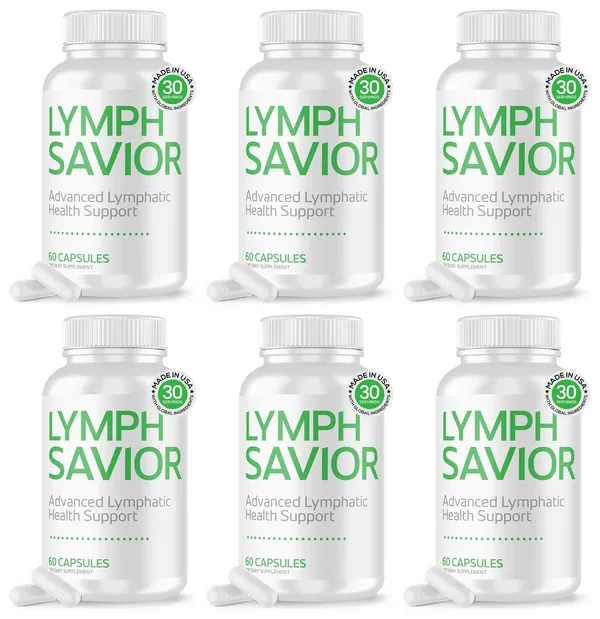
Every printed line on this label, read in full before you decide
The Supplement Facts panel, the Other Ingredients line, and all four badges are reproduced in full, with sourcing, on this website's ingredients page.
Four pack sizes, priced at the seller’s checkout, with 180 days from purchase on every one
Choose A Lymph Savior PackSwallowed whole, two a day with 6–8 oz of water, 60 to a bottle.
Why a vegetarian claim is voluntary, not mandatory, to disclose
It is worth being precise about why this label can legally say nothing about vegetarian or vegan suitability at all, because the silence can otherwise read as an oversight rather than what it actually is: a choice the regulation leaves open. Federal food and supplement labeling law requires disclosure of specific things — the identity and quantity of dietary ingredients, the nine major allergens under FALCPA, the Other Ingredients used to manufacture the product — and gelatin, properly named as "Gelatin" on the Other Ingredients line, satisfies that disclosure requirement completely. There is no equivalent federal requirement that a manufacturer additionally state whether the finished product is vegetarian, vegan, kosher or halal; those are voluntary marketing claims a company can choose to make, usually by seeking a specific third-party certification mark, and choose not to make, as this label does.
That is the same legal structure as the Non-GMO and Made in USA badges elsewhere on this bottle: all are voluntary claims the manufacturer opted into disclosing, layered on top of the mandatory minimum. The absence of a vegetarian badge is not a violation of anything; it simply means the manufacturer did not choose to pursue or print that particular voluntary claim, leaving "Gelatin (capsule)" as the only word on the label that actually answers the question.
How to actually check, since the label alone will not tell you
Because the printed label stops at the word "gelatin" without naming a source animal or a certifying body, confirming kosher, halal, vegetarian or vegan suitability requires going past the bottle itself. The most direct route is contacting the manufacturer and asking two specific questions: the source animal for the gelatin used in this specific product, and whether any third-party kosher or halal certification applies to it. A label's silence on a voluntary claim is not evidence either way, and treating it as reassurance in either direction would be reading more into four unrelated badges than any of them actually says.
A second, independent route exists for anyone who wants to verify an answer rather than simply accept one: third-party kosher certification marks (such as an OU, OK or Star-K symbol) and halal certification marks (such as those from IFANCA or a comparable accredited body) are themselves printed symbols, distinct from any of the four badges already on this bottle, and their absence here is informative in the same way the absence of an NSF or USP mark was informative on the GMP badge discussed elsewhere on this journal. A product that has actually earned kosher or halal certification for its specific capsule shell generally says so with a named mark, precisely because the certification has commercial value the manufacturer would want to display. No such mark appears on this label.
- U.S. Food and Drug Administration. 21 CFR 101.4 – Food; designation of ingredients. Requires ingredients to be listed by their common or usual name in descending order of predominance by weight, the rule governing how an Other Ingredients line is ordered and worded. https://www.ecfr.gov/current/title-21/chapter-I/subchapter-B/part-101/subpart-A/section-101.4
- U.S. Food and Drug Administration. Food Allergen Labeling and Consumer Protection Act (FALCPA) – the nine major food allergens FALCPA requires to be disclosed; gelatin is not among them. https://www.fda.gov/food/food-allergensgluten-free-guidance-documents-regulatory-information/food-allergen-labeling-and-consumer-protection-act-2004-falcpa