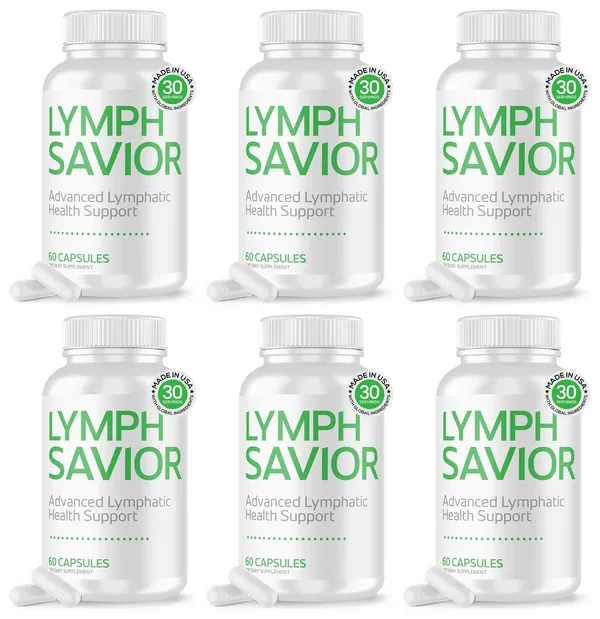
Lymph Savior Official Website › What GMP facility actually certifies
Label literacyThe GMP badge on this bottle certifies a manufacturing process. It does not certify what's inside.
The Lymph Savior bottle carries a round badge reading "GMPc Facility – Good Manufacturing Practice Certification," alongside three other badges: "Made in USA with global ingredients," "Scientific Formulated" and "Made with Non-GMO Ingredients." GMP stands for Good Manufacturing Practice, and for dietary supplements it is a specific, binding federal regulation — 21 CFR Part 111 — not a marketing phrase a company can define for itself.
What that regulation requires is process control: written procedures, equipment cleaning, personnel training, batch recordkeeping and identity testing of incoming raw materials. It does not require, and the badge does not certify, that any named botanical on this label was tested for potency, that the finished capsule was tested for the amounts printed on the Supplement Facts panel, or that any outside body verified the claim before the badge was printed.
What 21 CFR Part 111 actually obligates a manufacturer to do, who checks it, and the specific label claims a GMP badge does not cover.
The badge, exactly as printed
Four circular badges sit in a row near the bottom of the Lymph Savior bottle artwork, beneath the Caution text and the "No Added" line. Reading left to right: "Made In USA With Global Ingredients," a caduceus icon labeled "Scientific Formulated," a badge reading "GMPc Facility – Good Manufacturing Practice Certification," and "Made With Non-GMO Ingredients." This page is about the third of those four: the GMP badge, and specifically what the regulation behind that initialism actually obligates a manufacturer to do.
GMP stands for Good Manufacturing Practice. For a U.S. dietary supplement, that is not a loose industry phrase; it refers to a specific, binding set of federal regulations codified at 21 CFR Part 111, titled "Current Good Manufacturing Practice in Manufacturing, Packaging, Labeling, or Holding Operations for Dietary Supplements," issued by the Food and Drug Administration and in force since 2007 for large manufacturers and 2010 for the smallest ones. Every company that manufactures, packages, labels or holds dietary supplements for sale in the United States is legally required to follow it, which is a different fact than any individual company choosing to advertise that it does.
What 21 CFR Part 111 actually is
21 CFR Part 111 runs to several hundred pages of specific requirements, organized into subparts covering personnel qualifications and hygiene, physical plant design, equipment and utensil cleaning and maintenance, production and process controls, quality control, laboratory operations, packaging and labeling, holding and distribution, complaint handling, and recordkeeping. It was written to answer one central question: can this facility, as operated, reliably make a product that matches what the company intends to make, batch after batch, without contamination, mix-ups or undisclosed substitution? It was not written to answer a different question — does this specific formula, at these specific printed amounts, produce any particular health effect? — because that question belongs to a different part of federal law entirely (the FDA's general prohibition on unsubstantiated disease claims, and FTC's advertising-substantiation rules).
What the regulation requires a facility to do
Stripped to its practical core, 21 CFR Part 111 requires a facility to:
- Establish written procedures for every step of manufacturing, packaging, labeling and holding, and to actually follow them, not merely have them on file.
- Identity-test incoming raw materials. Before a botanical extract is used in production, the facility must confirm through at least one appropriate test or examination that the material is what the supplier's label says it is.
- Maintain batch production records for every lot manufactured, detailed enough that the full history of that batch can be reconstructed from the paperwork alone.
- Control equipment and the physical plant to prevent contamination, including pest control, cleaning schedules and appropriate design of production areas.
- Train and qualify personnel for the specific tasks they perform, with documented education, training or experience.
- Investigate and document consumer complaints that could indicate a quality-control failure, and keep those records for a defined retention period.
Every one of those is a real, enforceable requirement, and a facility that is genuinely following Part 111 is meeting a meaningfully higher operational bar than one that is not. That is a fact worth stating plainly, because it is easy for a page skeptical of a badge's marketing use to drift into implying the underlying regulation is meaningless. It is not. It is specific, binding and about process.
What the regulation does not require
21 CFR Part 111 requires identity testing of raw materials — confirming that what arrived at the loading dock is the botanical the supplier says it is. It does not require potency testing of every incoming lot against the specific amount a formula intends to use, and critically, it does not require finished-product testing to confirm that the amount printed on a given Supplement Facts panel is the amount actually present in the capsule, unless the manufacturer has itself set and documented a specific finished-product specification for that nutrient — which the regulation requires facilities to establish for themselves, not a fixed federal minimum applied uniformly to every ingredient on every label.
In practice, that gap is where the honest limit of a GMP badge sits. A facility can be in full, documented compliance with Part 111 — properly trained staff, clean equipment, identity-tested raw materials, complete batch records — and still ship a finished capsule whose printed amount for a given botanical has never been independently confirmed by a finished-product potency assay, if the company's own internal specifications did not require one for that ingredient. The regulation obligates a system. It does not, by itself, obligate a specific number on a specific label to be independently proven true.
The GMP badge also says nothing about clinical efficacy, nothing about whether a formula was tested on human beings before it was sold, and nothing about third-party certification. "GMPc Facility" on this bottle is presented as a manufacturer's own statement about its own operation; it is not the same claim as a seal from an independent, accredited certifying body such as NSF International or USP, which perform their own separate, paid, voluntary audits and testing programs that go beyond the federal GMP floor. No such third-party certifying body's name or logo appears on this label alongside the GMP badge.
Who checks it, and when
Part 111 compliance is enforced by the FDA primarily through facility inspections, which are risk-based and not continuous; a given facility may go years between FDA visits unless a complaint, an adverse-event report, or an import-alert flag triggers one sooner. When the FDA does inspect and finds deficiencies, the agency's typical first response is a Form 483 (a list of observed deficiencies) or a public warning letter, both of which are published and searchable on FDA's own website by company name. This page did not locate a company name, FDA registration number, or specific manufacturing-facility address printed on the Lymph Savior label beyond the distributor address in Akron, Ohio; a distributor address is not the same thing as the manufacturing facility's address, and the label does not name the manufacturing site this badge refers to.
Why the word "certification" is doing more work than the rule supports
The badge's own text reads "GMPc Facility – Good Manufacturing Practice Certification," and that word, certification, is the part worth slowing down on. Compliance with 21 CFR Part 111 is a legal obligation every dietary-supplement manufacturer in the United States already carries, whether or not a bottle prints a badge about it; it is not an optional credential a company earns and a competitor without the badge necessarily lacks. There is no single federal "GMP certificate" that the FDA issues to a facility the way a passport is issued to a traveler. A company that prints a GMP badge is typically asserting one of two things: that it has undergone a private, paid, third-party GMP audit (common providers include NSF, UL and several smaller specialty auditors, usually named explicitly when this is the case), or that it is simply stating, on its own authority, that its facility follows the federal regulation it is legally required to follow regardless.
This label's badge names no third-party auditor. That does not mean the underlying facility is out of compliance — most dietary-supplement manufacturers are, by law, required to be in compliance and most make a good-faith effort to be — it means the badge, as printed, is closer to the second category: a manufacturer's own statement about its own legal obligation, presented in a visual format (a circular seal) that commonly signals independent third-party verification to a reader who has not looked closely.
Three questions a GMP badge cannot answer by itself
Because the badge is a process claim rather than a product-testing claim, there are specific, concrete questions it leaves open that a prospective buyer relying on the badge alone should recognize as still unanswered:
Does GMP certification mean every bottle contains exactly what the label says?
Not by itself. Part 111 requires a facility to have a system for verifying finished-product specifications it has set for itself, but it does not impose a uniform federal requirement that every single nutrient on every label be independently assayed in the finished capsule, and it does not require the results of whatever testing a company does perform to be published or disclosed to the public.
Is a "GMPc Facility" badge the same as third-party GMP certification from NSF or similar?
Not necessarily, and this label does not say which one it is. A third-party certifier audits a facility against GMP standards (sometimes a more stringent private standard layered on top of the federal floor) and puts its own name and logo on the result. A badge naming only "GMP" with no certifying body attached is most often a manufacturer's own representation of its legal compliance status, not an independent party's finding.
Does the FDA pre-approve a dietary supplement formula before it reaches store shelves?
No. Unlike prescription and over-the-counter drugs, dietary supplements do not go through FDA pre-market approval for either safety or effectiveness. The FDA's authority is almost entirely after-the-fact: facility inspections for GMP compliance, and enforcement action if a marketed product is later found to be adulterated, misbranded, or to make an illegal disease claim. A GMP badge speaks to the first of those two enforcement mechanisms and says nothing about the second.
What a GMP badge is actually useful for
None of this means the badge is worthless or deceptive by definition; it means it answers a narrower question than its placement on the label implies.
- What it reasonably supports: a claim that the company is representing itself as operating under the federal process-control framework that applies to every legal U.S. supplement manufacturer.
- What it does not support on its own: a claim that any specific printed amount on the Supplement Facts panel — the 125 mcg of Centella asiatica, the 200 mcg of Horse Chestnut, or any other line — has been independently, third-party verified as accurate.
- What would close that gap: a named third-party certifier (NSF, USP, UL or similar) with its own logo on the label, or a certificate of analysis for the specific batch a buyer holds, available on request from the manufacturer.
A GMP badge is a real regulatory reference, not an empty one. What it is not is a substitute for finished-product testing of the specific numbers printed above it on the same bottle. The distance between those two things — a real, binding federal requirement, and a badge that implies more independent verification than the requirement itself provides — is the single most important thing to carry away from reading this particular part of the label closely.
- U.S. Food and Drug Administration. 21 CFR Part 111 – Current Good Manufacturing Practice in Manufacturing, Packaging, Labeling, or Holding Operations for Dietary Supplements. https://www.ecfr.gov/current/title-21/chapter-I/subchapter-B/part-111
- U.S. Food and Drug Administration. Dietary Supplement Current Good Manufacturing Practices (CGMPs) and Interim Final Rule (IFR) Facts. Overview of what Part 111 requires and how FDA inspects for compliance. https://www.fda.gov/food/dietary-supplements-guidance-documents-regulatory-information/dietary-supplement-current-good-manufacturing-practices-cgmps-and-interim-final-rule-ifr-facts