Lymph Savior Official Website › Blog › Ingredients list
Lymph Savior journalLymph Savior® Ingredients List: The Six Botanicals, in Label Order
Quick answer: The Lymph Savior ingredients list has six botanicals: red clover, horse chestnut seed, red root, Centella asiatica, burdock root and yerba mate leaf. The label prints a name and a plant part for each one and no amount, so no milligram figure on this page belongs to the capsule.
What is on the Lymph Savior ingredients list?
Six botanicals, and nothing else is named. They are printed on the bottle artwork and repeated on the brand’s own ingredient graphic, in the same order, with the same plant parts. Here is the list exactly as the artwork sets it out.
| Printed name | Botanical name | What it is |
|---|---|---|
| Red Clover Extract (leaves and flowers) | Trifolium pratense | A pasture legume |
| Horse Chestnut Extract (seed) | Aesculus hippocastanum | The seed of the tree, not the husk |
| Red Root Powder | Ceanothus americanus | New Jersey tea, a North American shrub |
| Centella asiatica Extract (aerial parts) | Centella asiatica | Gotu kola leaf and stem |
| Burdock Powder (root) | Arctium lappa | The root, eaten as a vegetable in Japan |
| Yerba Mate Extract (leaves) | Ilex paraguariensis | The leaf of a South American holly |
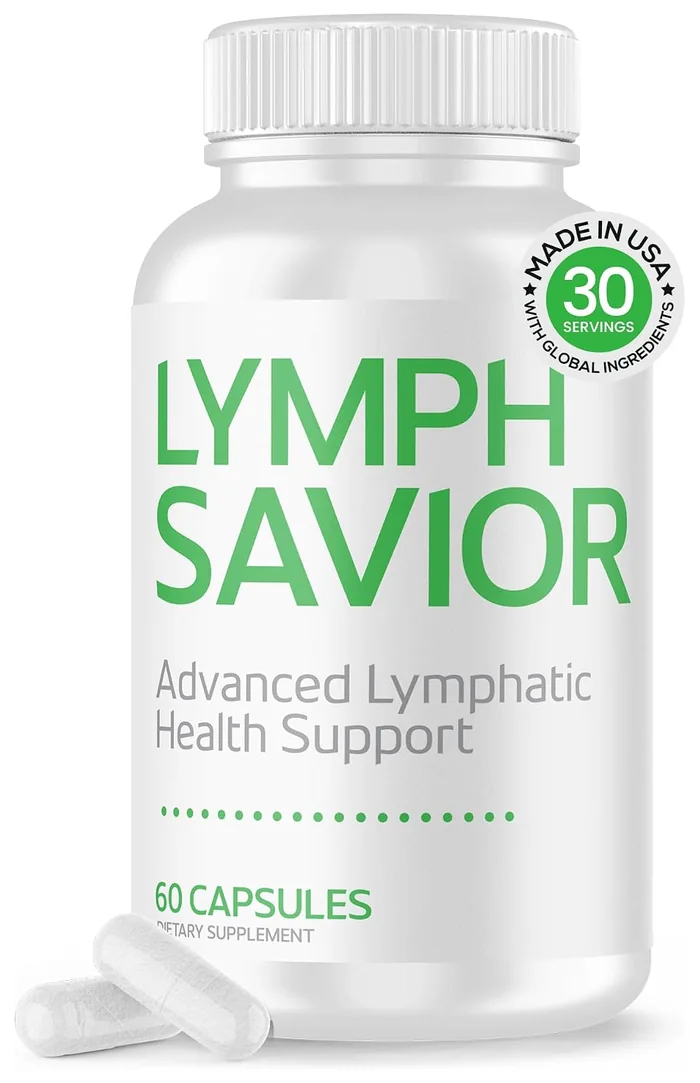
Each bottle holds 60 capsules and 30 servings. The directions are two capsules a day with 6 to 8 oz of water. The full page for each plant is on our ingredients page.
Does the Lymph Savior ingredients list show amounts?
No. There is no Supplement Facts panel on the bottle artwork, on the brand’s ingredient graphic or on the seller’s page. Six names are printed and no milligram figure is printed for any of them.
That matters when you read other pages about this product. A page that quotes a dose for red clover or horse chestnut in this capsule has found a document we have not seen. When this website mentions a number, it is the amount a published study of the plant used, and it is labelled that way. We cover the gap in our post Six names and no numbers.
Every bottle prints the same six names
Order through the official checkout and the lot on your bottle can be matched to your order ID.
Four pack sizes, priced at the seller’s checkout, with 180 days from purchase on every one
Choose A Lymph Savior PackOpened bottles included · batch LYM-26/LY-5549 · ships from the United States
Which part of each plant is on the ingredients list?
The plant part is worth a second look, because the research is often about one part only. Horse chestnut is named as the seed, and the seed extract is the form the published trials used. Red clover names the leaves and flowers. Centella names the aerial parts, which means the leaf and stem. Burdock names the root. Yerba mate names the leaves.
Two entries are powders and four are extracts. The label does not say how strong any extract is. It does not say whether the horse chestnut extract is standardised to aescin, which is the word the trials relied on. Our post The missing word on a horse chestnut label explains why that single word matters.
What sits behind each ingredient on the list?
The evidence is uneven, and it is worth knowing which names carry weight and which do not. All figures below come from published studies of the plants, not of this capsule.
- Horse chestnut seed. The strongest record on the list. A 240-person trial used 50 mg of aescin twice a day for 12 weeks, and a Cochrane review pools seventeen trials. The trials were in vein conditions.
- Centella asiatica. A systematic review pooled eight trials, again in vein conditions, and it does not settle on one dose.
- Red clover. A meta-analysis found an effect at 80 mg of isoflavones a day or more for 12 weeks, on hot flushes and not on swelling.
- Burdock root. One small trial of 36 people used 6 g of root a day as tea for six weeks.
- Yerba mate. Studied as a brewed drink and as extracts. It is the only source of caffeine on the label.
- Red root. A long folk record and no human clinical trial at any dose.
Red root has its own page of notes: The one ingredient with no trial behind it.
How do you use the ingredients list before you buy?
A list with no amounts still tells you three practical things.
- Caffeine. Yerba mate is the only caffeine on the label, and the amount is not printed. Count the capsules inside your day’s caffeine. Our post Yerba mate and iron covers the iron point.
- Allergies. If you react to any of the six plants, skip the bottle. Burdock and red root are the two most people have not met before.
- Medicines. Red clover and horse chestnut both carry bleeding cautions alongside blood thinners, and red clover is weakly oestrogen-like. Our safety page sets out who should ask first.
The product is for healthy adults aged 18 and over. It is not for anyone pregnant or nursing.
Does the website list match the bottle list?
It should, and you can check it in two minutes. Open the checkout, read the ingredient graphic, and compare it with this list. The six names and the order should match. Look at the base of the bottle for the lot number, which for our current stock is LYM-26/LY-5549.
A bottle from a marketplace cannot be matched to a lot on our side, which is one reason we point to the official route. The steps are in Five checks before you order.
Frequently asked questions
What is in Lymph Savior?
Six botanicals: red clover, horse chestnut seed, red root, Centella asiatica, burdock root and yerba mate leaf. Each bottle has 60 capsules, and the directions are two capsules a day.
Is there an amount listed for each Lymph Savior ingredient?
No. The label names the six botanicals and prints no amount for any of them, because there is no Supplement Facts panel.
Does Lymph Savior contain caffeine?
The yerba mate leaf is the only caffeine source on the label. The amount is not printed, so count the capsules inside your daily caffeine.